 Camp Verde AZ Experts Plumbers
Slab Leak Detection in Camp Verde: Is the Water Under Your Floor?
A warm patch on the floor, a meter that will not stop or the faint sound of running water at night can all mean a leak under concrete, and they can also mean something far simpler. Emergency slab leak work starts with proving where the water is going, because opening a floor on a guess is the costliest mistake in this trade. A plumber serving your area picks the job up from the dispatcher and starts with the questions that settle it.
Call now, 24/7 See all 15 services
- Licensed and insured plumbers
- Same-day service when available
- 24/7 emergency dispatch
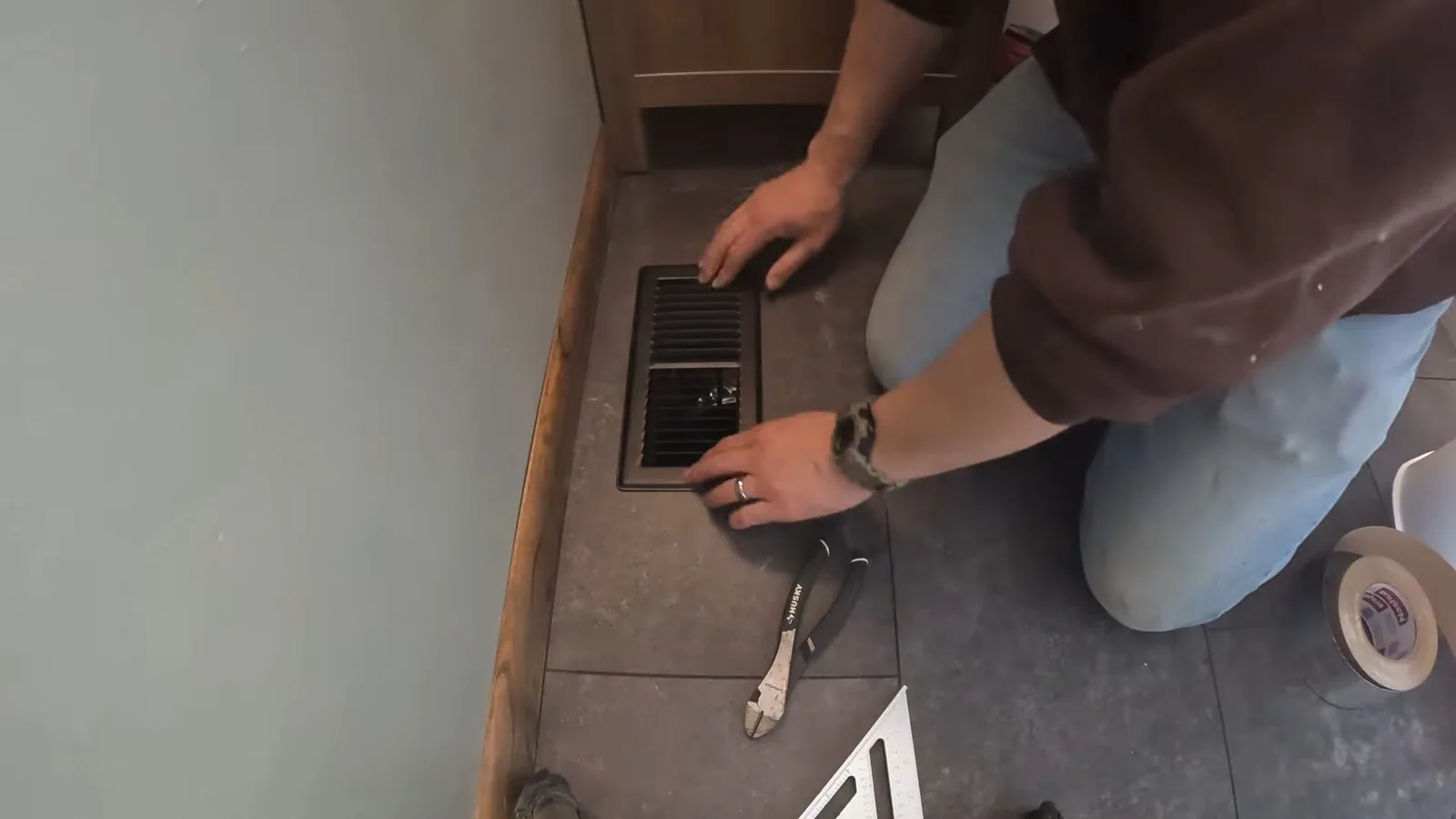
Confirm what you have before anyone talks about a slab leak
Not every home has a slab, and not every wet floor is a slab leak. Before paying for detection, work through the questions a plumber will ask:
- Do you know what the home sits on: a concrete slab, a raised floor over a crawl space, or piers? Plans, an inspection report or a quick look under the house will tell you.
- Is the loss real? Close every tap and the main valve, then watch the meter dial.
- With the main closed, a meter that goes quiet puts the leak inside the house, while one that still spins puts it outside, on the buried run from the meter.
- Are the signs concentrated in one part of the house, such as one room's floor or one wall of the slab edge?
Only after those answers does it make sense to look for a leak in or under the floor. Skipping them is how homeowners end up with a jackhammered hallway and a leak in the attic.
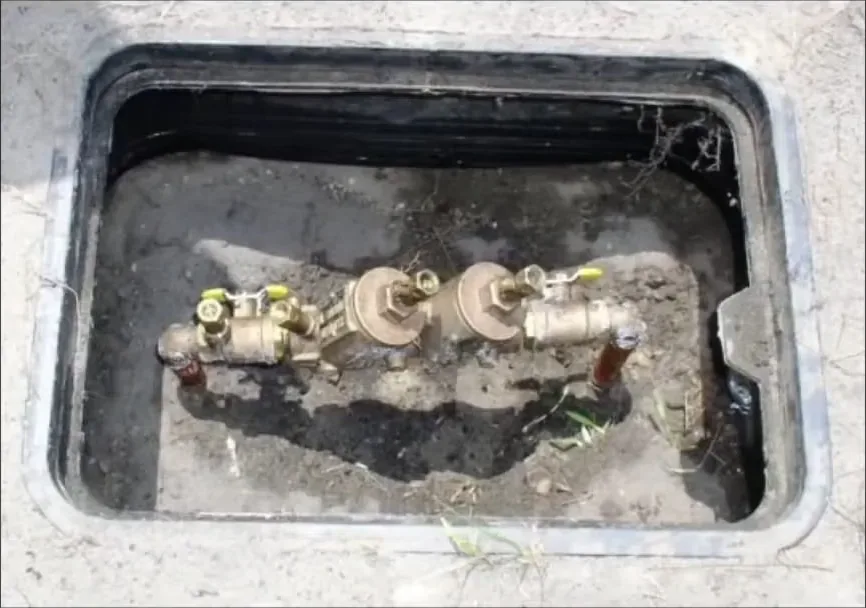
How a leak under concrete is located
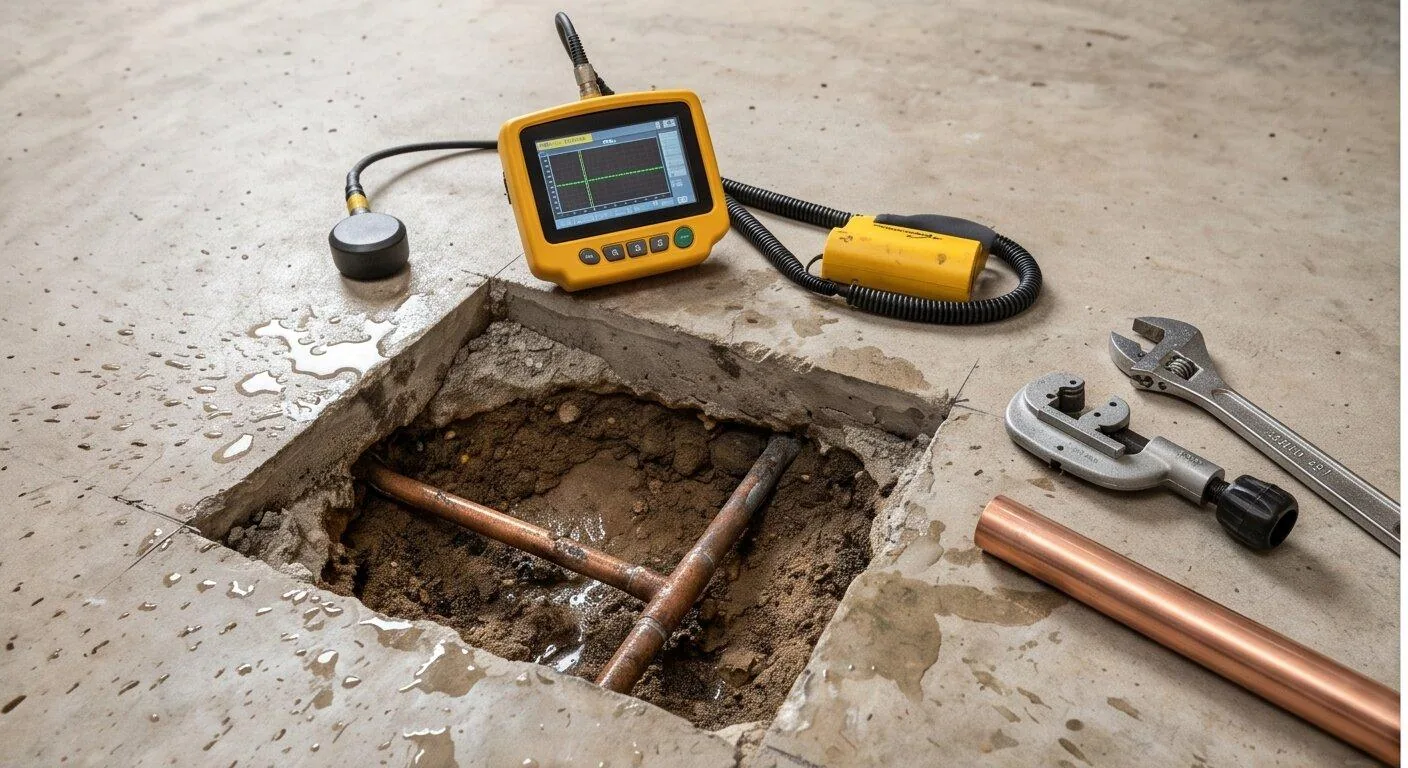
Detection on a slab relies on sound and temperature. A sensitive listening device is moved across the floor in a grid while the system holds pressure, and the loudest, steadiest point marks where pressurized water is escaping. For hot water lines, a thermal camera can pick up warmth traveling through the floor above the pipe.
Ask what the plumber will leave you with. A good result is a marked spot on the floor, a short written note of what was found, and a straight answer about how certain the location is. Detection that ends with a vague area, followed by cutting in several places, is a poor trade.
If the leak turns out to be inside a wall or ceiling rather than under the floor, the work moves to the general leak detection page, where wall and ceiling leaks are covered.
One line on emergencies
If water is already coming up through the floor, close the main valve and call; same-day service is offered when available, and the homepage first-minutes steps list what else is safe to do.
Warm floor or a meter that will not stop?
A plumber serving your area can start with the meter test and a plan to locate the leak.
Tunnel, reroute or epoxy lining: which repair fits
Once the leak is located, there are three common ways to deal with it. The right one depends on where the pipe runs, what it is made of and how many leaks the system has had.
| Method | What it involves | When it tends to fit | Trade-offs to ask about |
|---|---|---|---|
| Spot repair through the slab | Cutting the concrete directly over the pipe, replacing the section, then patching | A single accessible leak in a clear spot | Floor finish has to be repaired; ask who does that |
| Tunnel under the slab | Digging beneath the slab from outside to reach the pipe without breaking the floor | When the pipe sits near an edge and the floor above must stay intact | Slower and dependent on soil and access |
| Reroute overhead | Abandoning the failed run and running new pipe through the attic or walls | Repeated leaks in one run, or a run that is hard to reach | Walls or ceilings need access holes; new pipe is visible until closed up |
| Epoxy lining | Coating the inside of the existing pipe | Pipe that is sound enough to hold a lining | Not every pipe qualifies; ask for the plumber's reasons in writing |
If the same house keeps developing leaks in different places, a reroute or a full whole-home repipe often ends the cycle instead of repairing one leak at a time. Ask the plumber to explain why they favor one option over another and what they would do if the first fix fails.
Ready to confirm the leak?
Tell the dispatcher which room is showing signs and what the meter did when the main was closed.
What a leak in concrete does to the house
A pressurized leak under a slab can wet the soil and the underside of the concrete, lift flooring and run along the slab edge toward the nearest low spot. Long-running leaks can also soften the ground under a section of slab. How a given Camp Verde home reacts depends on its foundation, its soil and how long the water has been escaping, so a plumber has to look rather than assume. Tell the plumber when the warm spot or the sound began and which rooms it is near, since that history narrows where the detection gear starts.
The practical advice is to stop the loss early and document the damage. If water has already soaked flooring or drywall, the water damage restoration page explains removal and drying of the wet area.
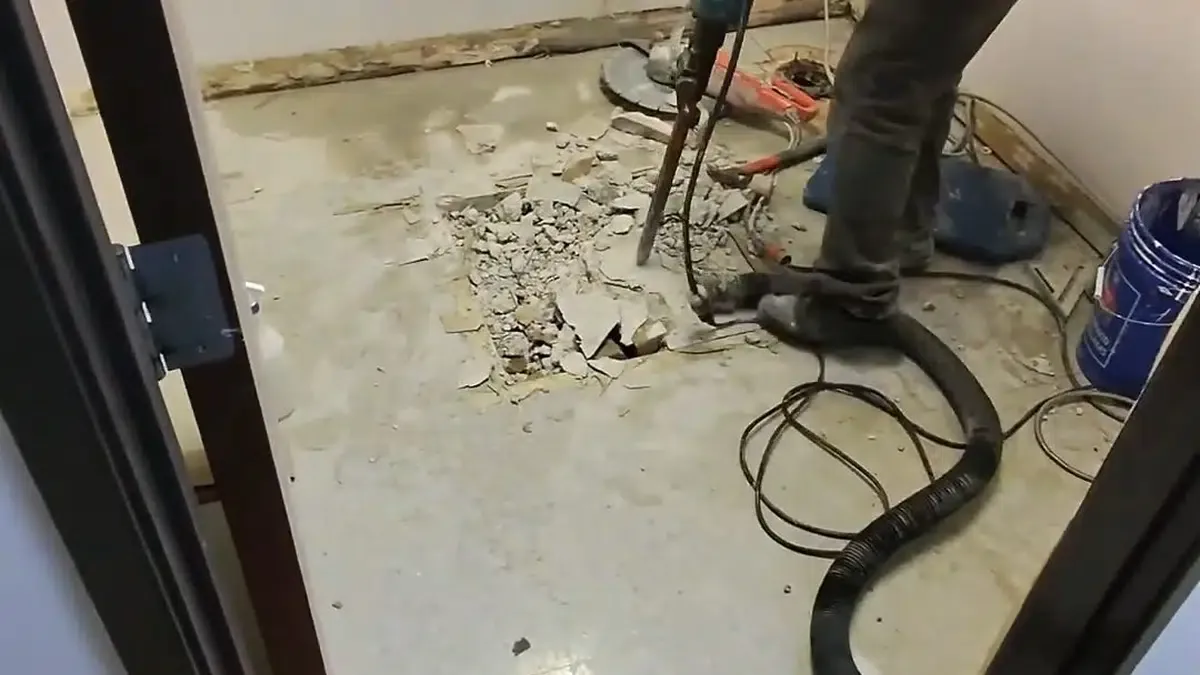
Permits, digging and who to ask
A slab repair that goes through the floor or a reroute that replaces a section of pipe may need a permit. The Town of Camp Verde's Building Safety Division, at (928) 554-0050, can say whether yours does; no Town rule on this could be found, so ask before work begins. Outside Town limits, the Yavapai County Development Services office handles permits. Write down the 811 ticket number once it is issued, because the contractor and the utilities will both refer to it.
If any digging is planned outside the house for a tunnel, Arizona 811 must be called at least two full working days beforehand so underground utilities are marked. Finally, check the contractor's Arizona Registrar of Contractors license number before signing; a plumbing license is required for this kind of work.
Slab leak questions
What are the early symptoms of a slab leak?
The common ones are a warm spot on the floor, the sound of running water when every fixture is off, a meter that keeps turning, damp carpet or flooring along an edge, and a water bill that rises with no change in use. None of them proves the leak is under concrete, because the same signs come from pipes in walls and ceilings, so the first job is confirming the location.
Does homeowners insurance pay for a slab leak?
Coverage differs from policy to policy, and many policies treat the cost of reaching the pipe differently from the damage the water caused. Read the plumbing and water damage sections of your policy, call your insurer before work begins if you can, and ask the plumber for a written description of the cause, the location and what was done.
How do I know whether I actually have a slab leak?
Confirm first that the home has a slab at all, then confirm that water is being lost. A closed main valve with a still-turning meter points to the line outside the house, while a meter that stops once the main is closed points to a leak inside. Only after the plumber has isolated and located the loss does the diagnosis become a slab leak.
- Licensed and insured plumbers
- Same-day service when available
- 24/7 emergency dispatch
Signs of a leak under the floor
Describe what you see, where the home is and when it started; that is enough to begin.