 Camp Verde AZ Experts Plumbers
Find Where the Water Goes: Leak Detection and Repair in Camp Verde
Water where it should not be, or a bill that climbs while nothing changed at home, usually means a leak you cannot see. Emergency leak detection begins by narrowing the loss to one pipe, one fixture or one part of the house before anyone opens a wall. Call the number below and a plumber serving your area can walk you through the first steps.
Call now, 24/7 See all 15 services
- Licensed and insured plumbers
- Same-day service when available
- 24/7 emergency dispatch
Signs of a hidden leak in a Camp Verde home
Most hidden leaks announce themselves long before water pools on a floor. These are the signs that send people to the phone:
- A water meter that keeps moving when every tap, the ice maker and the washer are off
- A bill that is higher than usual with no change in how the household uses water
- Drywall or ceiling paint that is stained, bubbling or soft to the touch
- A warm patch on a floor, or the sound of running water in a quiet house at night
- A musty smell in a closet or cabinet that has no other explanation
- Water pressure that dropped suddenly instead of fading over months
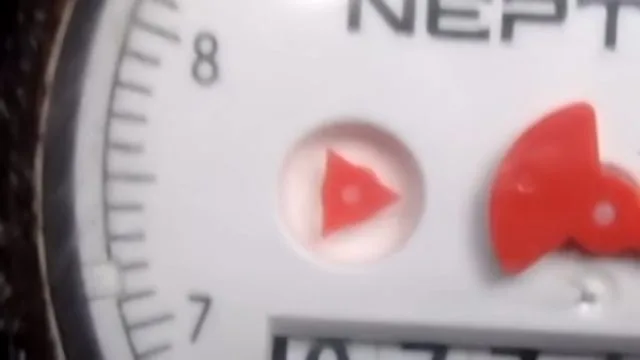
The meter is the quickest check you can do yourself. Turn off everything that uses water, then watch the small low-flow dial or triangle on the meter face for a few minutes. If it turns, water is leaving the system somewhere. The meter cannot say where, only that the plumbing is not sealed.
| What you notice | Where it often comes from | What the plumber checks first |
|---|---|---|
| Meter moves with everything off | A supply line, a fitting, or a toilet that leaks into the bowl | Whether the loss is before or after the main shutoff |
| Stain on a ceiling below a bathroom | A shower valve, a drain connection or a supply line overhead | Each fixture above, run one at a time |
| Damp wall beside a water heater | The heater's connections, relief valve or a nearby line | The heater first, then the lines in the wall |
| Warm floor spot | A hot water line running under or through the floor | Hot side versus cold side pressure |
| Sudden low pressure | A leak after the regulator, or a regulator that is failing | Pressure at a hose bib against the meter |
Finding a leak you cannot see
Good detection is a process of elimination. The plumber closes the main valve and watches the meter: if it stops, the leak is inside the house; if it keeps turning, the loss is on the line between the meter and the house, which is a water line job. From there the search narrows to a room, then a pipe.
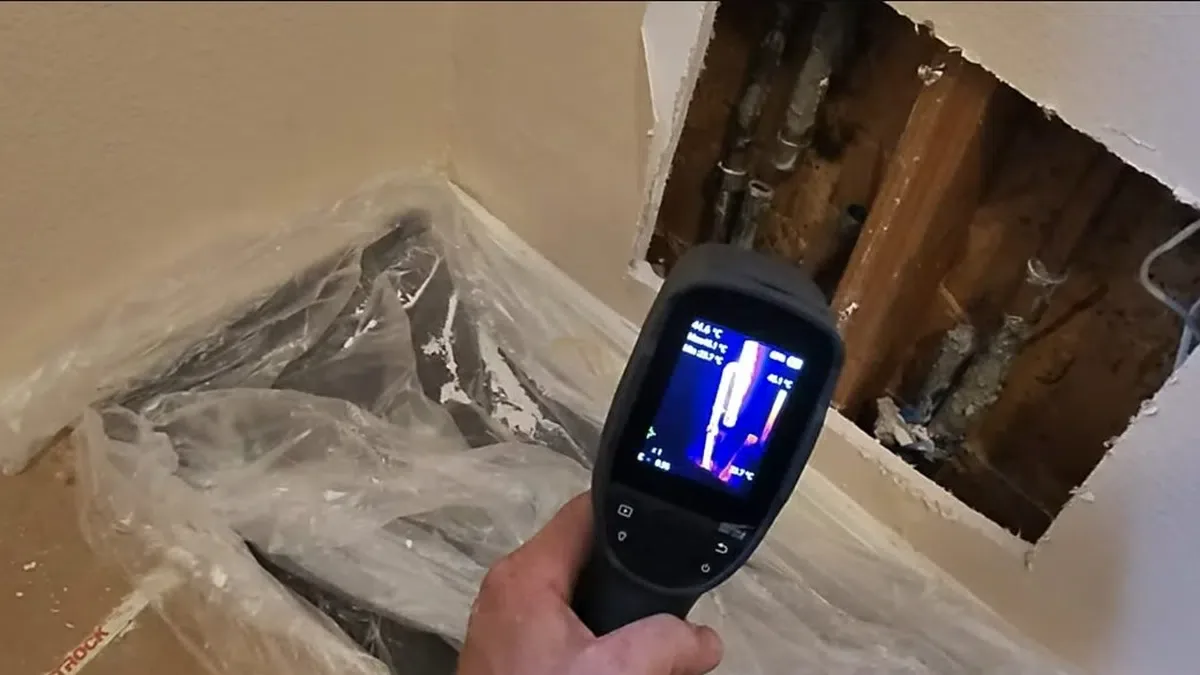
Listening equipment picks up the hiss of pressurized water in a pipe, thermal imaging shows warm water running through a cool wall, and a hydrostatic pressure test isolates one stretch of pipe to see whether it holds. Each method answers a different question, so a plumber may use more than one. Before anyone cuts into a wall, ask them to mark the spot and explain what they expect to find behind it.
In a home with a crawl space or basement, the search includes the underside of the floors and the lines overhead, because a drip there may never reach the living area. Buried lines in the yard are a water line job, covered on the water line repair page, and water that seems to rise through a concrete floor belongs with slab leak detection.
A meter that will not stop turning?
Shut the main valve when you can reach it and ring in; the first question will be what the meter is doing.
Repairing the leak once it has been located
Many leaks come down to a failed fitting or a short section of pipe, and the repair is a swap; a good visit ends with the leak found and fixed, not only found. The larger cost is usually access: a leak behind tile or inside a finished wall means opening that surface, and the plumber and a finish trade are often separate. Ask who will close the opening and whether that is included in the plan.
Pressure matters here. The Town of Camp Verde's 2025 water report notes that a pressure regulator valve leaves the factory set to 50 PSI and that a failing valve is a common cause of pressure complaints. A regulator that has crept too high puts steady strain on every fitting in the house, so ask the plumber to read pressure at a hose bib before treating a leak as a one-off.
When the same system leaks twice in a short time, patching stops making sense. That is the point to talk about repiping or replacing the worn section to end the leak cycle instead of paying for a third visit. If water has already soaked a floor or wall, removal and drying of the wet area is a separate step.
Fixture leaks and pipe condition checks
A dripping faucet, a running toilet or a weeping shower valve loses water just as steadily as a buried pipe. Those jobs belong on the fixture repair page, where the parts and the fixes are laid out. If you are not sure whether a leak is a fixture or a pipe, start with this page and let the plumber sort it out.
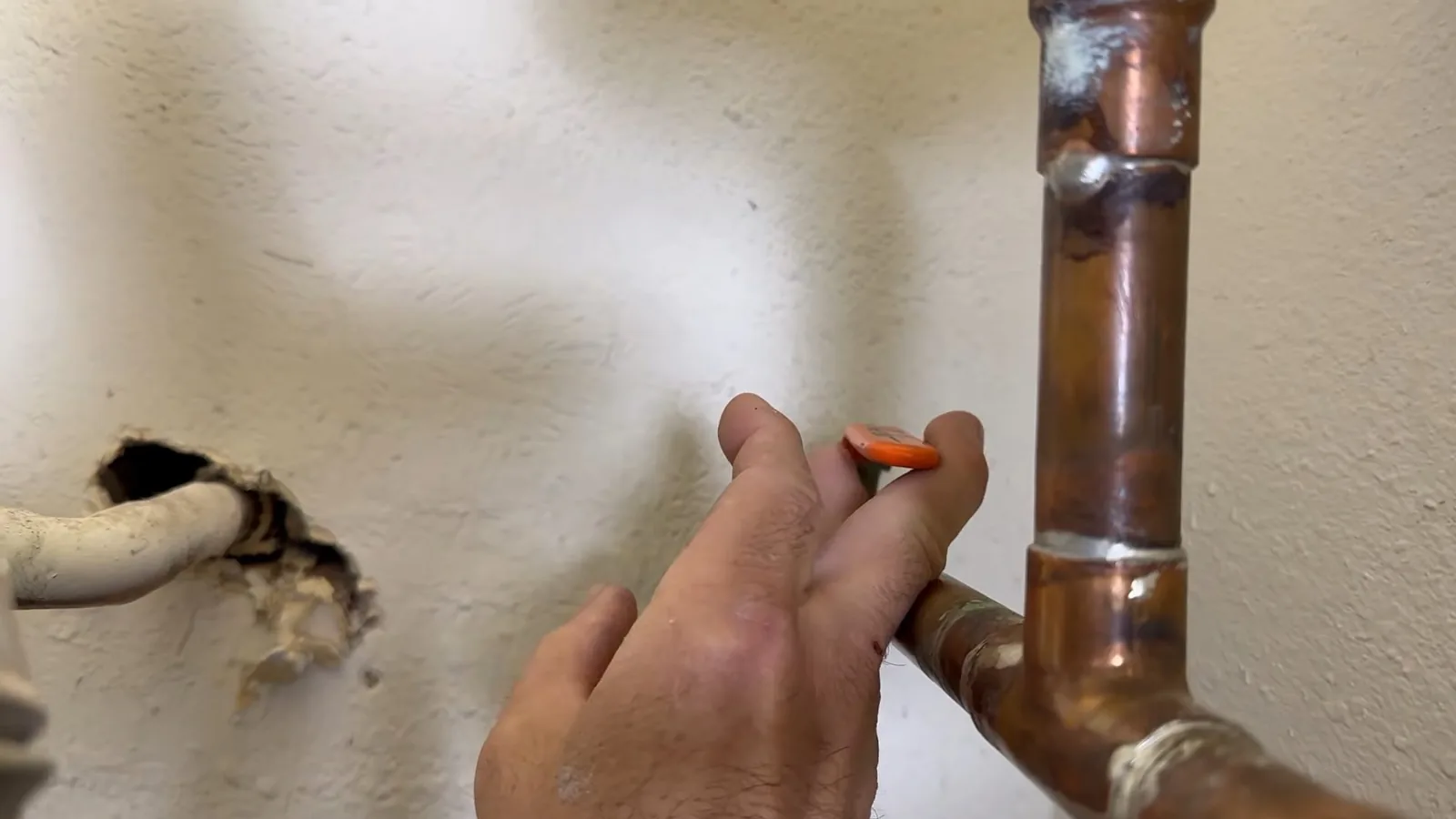
A pipe condition check is the other half of leak work. While a plumber is already looking at a wall or a crawl space, ask what the supply pipes are made of and what condition they are in. An inspection of the pipes, not a guess from the age of the house, is the safe basis: confirm the material on the pipe itself and have it written down.
Stain on the ceiling, bill still climbing
Give the dispatcher the meter reading and the room. It shortens the search.
What your home type changes
The Town of Camp Verde's 2023 community profile counts 4,813 occupied homes, about 62 percent single-family detached and about 28 percent manufactured. Tell the plumber which you have. Access to supply lines and the location of a shutoff differ between the two, and that changes how a leak is traced and what has to be opened.
Source: Town of Camp Verde 2023 Community Profile, Yavapai College Regional Economic Development Center. Accessed 2026-11-01.Before you call
These details let the dispatcher describe the job accurately to the plumber:
- The meter reading now and, if you can, again after fifteen minutes with everything off
- Where the main shutoff is and whether you have already closed it
- Which room, wall or fixture shows the damage and when you first saw it
- Whether you get water from the Town of Camp Verde, Verde Lakes Water Company or a private well
- Whether the house is site-built or manufactured
If you plan to dig anywhere on the property to look for a buried line, call Arizona 811 first; it needs two full working days to mark underground utilities. For a leak that is flooding the house right now, close the main and call; the homepage steps for the first few minutes cover what else to shut off, and same-day service is offered when available.
Leak questions we hear most
Leaky ceilings causing water stains: is it the plumbing or something else?
A stain that grows after someone runs a shower, washer or sink points to plumbing above it. A stain that grows after rain points to the roof, which is a different trade. A plumber can run water through the fixtures overhead one at a time and see whether the spot responds, so tell the dispatcher when the stain changes.
Why would a shower valve leak inside the wall after it was just repaired?
A fitting that was threaded in at a slight angle can weep slowly instead of failing at once. The water runs down the inside of the wall, which is why a stain or soft drywall can show up days later. Because the connection sits behind the tile or panel, the plumber has to open access to reseat it, so ask who will repair the opening afterward.
How can I tell whether a bathroom leak is the toilet, the shower or a supply line?
Dry the floor and the fixtures, then watch for the first drop. A damp ring at the toilet base points to the seal or the tank bolts, drips under the vanity point to a supply line or trap, and water at the wall beside the tub points to the valve or the pipes behind it. Putting dye in the toilet tank and waiting without flushing shows whether the tank is leaking into the bowl.
- Licensed and insured plumbers
- Same-day service when available
- 24/7 emergency dispatch
Leak signs anywhere in the Verde Valley
Say where the leak is showing and where the home is, and the dispatcher takes it from there.